Fantasy is a genre of fiction that uses magic or other supernatural elements as a main plot element, theme, or setting. Many works within the genre take place in imaginary worlds where magic and magical creatures are common. Fantasy is generally distinguished from the genres of science fiction and horror by the expectation that it steers clear of scientific and macabre themes, respectively, though there is a great deal of overlap between the three, all of which are subgenres of speculative fiction.
An onomatopoeia adjectival form: "onomatopoeic" or "onomatopoetic"is a word that phonetically imitates, resembles or suggests the source of the sound that it describes. Onomatopoeia (as an uncountable noun) refers to the property of such words. Common occurrences of onomatopoeias include animal noises such as "oink", "miaow" (or "meow"), "roar" or "chirp".
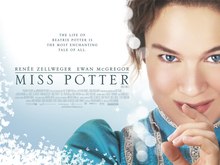
Miss Potter is a 2006 English-American biographical fiction family drama film directed by Chris Noonan. It is a biographical film of children's author and illustrator Beatrix Potter, and combines stories from her own life with animated sequences featuring characters from her stories, such as Peter Rabbit. Scripted byRichard Maltby, Jr., the director of the Tony-winning Broadway revue, Fosse, the film stars Renée Zellweger in the title role; Ewan McGregor as her publisher and fiancé, Norman Warne; and Lloyd Owen as solicitor William Heelis. Emily Watson stars as Warne's sister, Millie. Lucy Boynton also stars as the young Beatrix Potter.
Bildungsroman
In literary criticism, a Bildungsroman novel of formation, novel of education,or coming-of-age story (though it may also be known as a subset of the coming-of-age story) is a literary genre that focuses on the psychological and moral growth of the protagonist from youth to adulthood (coming of age), in which character change is extremely important.
Fable is a literary genre: a succinct fictional story, in prose orverse, that features animals, mythical creatures, plants, inanimate objects, or forces of nature that areanthropomorphized (given human qualities, such as verbal communication) and that illustrates or leads to an interpretation of a moral lesson (a "moral"), which may at the end be added explicitly as a pithy maxim.
parable
A parable is a succinct, didactic story, in prose or verse, which illustrates one or more instructive lessons or principles. It differs from a fable in that fables employ animals, plants, inanimate objects, or forces of nature as characters, whereas parables have human characters.[1] A parable is a type of analogy.
e.g: A Tale of a Fairy Tale
allegory
As a literary device, an allegory in its most general sense is an extended metaphor. Allegory has been used widely throughout history in all forms of art, largely because it can readily illustrate complex ideas and concepts in ways that are comprehensible or striking to its viewers, readers, or listeners.

was an Irish playwright, novelist, essayist, and poet. After writing in different forms throughout the 1880s, he became one of London's most popular playwrights in the early 1890s. He is remembered for his epigrams, his novel The Picture of Dorian Gray, his plays, as well as the circumstances of his imprisonment and early death.
is a form of speech or disclosure which contains an expression of lesser strength than would be expected. Understatement may be employed for emphasis,for humour, or ironically. This is not to be confused with euphemism, where a polite phrase is used in place of a harsher or more offensive expression, though understatement too can be used to moderate something that might seem harsh.
The figure of speech used in understatement, litotes, is always deliberate
was an Irish playwright, novelist, essayist, and poet. After writing in different forms throughout the 1880s, he became one of London's most popular playwrights in the early 1890s. He is remembered for his epigrams, his novel The Picture of Dorian Gray, his plays, as well as the circumstances of his imprisonment and early death.
His works-

New Vocabulary
1. radish白蘿蔔
2. tool shed
3. scarecrow 稻草人
4. lane 巷子
5. drop 大水滴 ; drip 小水滴
6 get into mischief 搗亂
7. parsley 西芹
8. be frightened
9. wriggle
10. dosage
Neverland is a fictional location featured in the works of J. M. Barrie and those based on them. It is the dwelling place of Peter Pan, Tinker Bell, the Lost Boys and others. Although not all people in Neverland cease to age, its best known resident famously refused to grow up, and it is often used as a metaphor for eternal childhood (and childishness),immortality, and escapism. It was first introduced as "the Never Never Land" in the theatre play Peter Pan, or The Boy Who Wouldn't Grow Up by Scottish writer J. M. Barrie, first staged in 1904.

沒有留言:
張貼留言