1. London Bridge is falling down History about London Bridge Queen Eleanor – unpopular at the best of times – was blamed for misappropriating bridge revenues and failing to use them for repairs. This gave rise to a rewrite of the popular rhyme “London Bridge is falling down”: the original was based on a Norse saga, but the addition of “my fair lady” was a clear dig at the Queen. 2.Marry had a little lamb As a young girl, Mary Sawyer (later Mary Tyler) kept a pet lamb that she took to school one day at the suggestion of her brother. 3. Old Mother Hubbard The name Mother Hubbard was used as a character from 1591, although the surviving works that include her do not bear any relationship to the rhyme. part of lyrics: She went to the fruiterer's To buy him some fruit; When she came back He was playing the flute. **put similar words together to practice pronunciation 4.Little Bo Beep 5. Little Miss Muffet 6. Hickory Dickory Dock lyrics Hickory, dickory, dock. The mouse ran up the clock. The clock struck one, The mouse ran down, Hickory, dickory, dock The words 'Hickory,' 'Dickory' and 'Dock' actually come from the Old English roots for 'Ten,' 'Eleven' and 'Twelve' respectively (hicore, dicore and doc). Thus, the numbers show the mouse running up the clock to 12, and then 'down he run' after the clock hands started back down (the clock stuck one, two and three). vocabulary- dock (noun) 碼頭
meaning:an area of water in a port that can be closed off and that is used for putting goods onto and taking them off ships or repairing ships 7.Three Little Kittens mitten(noun) 連指手套 a type of glovenounwith a singlepart for all the fingers and a separatepart for the thumb
Old woman'' Is he one of my children?''
Huckle''No, he is a worm.''→ 開始出現分類(sorting)的觀念 10. Wee Willie Winkie 11. Old King Cole
Old King Cole was a merry old soul And a merry old soul was he; He called for his pipe, and he called for his bowl And he called for his fiddlers three. Every fiddler he had a fiddle, And a very fine fiddle had he; Oh there's none so rare, as can compare With King Cole and his fiddlers three. fiddler(走唱的)小提琴 “Old King Cole” who called
for his pipe, bowl and fiddlers is an English language nursery rhyme. However, The King Cole Bar is an upscalecocktail lounge in the St.RegisHotel
in Midtown Manhattan. One of the shooting scenes of The Devil Wears Prada (the name of the
film) is located at KingColeBar
where Anne Hathaway got the copy of the newest Harry Potter manuscript from a suitor editor.
3. What would you do if you were (one of character in the movie)?
Quote from the film Minetook me where I belong
It makes me happy. Writing is delicious.
a.Children'sliterature-Children's literature or juvenile literature includes stories, books, magazines, and poems that are enjoyed by children. Modern children's literature is classified in two different ways:genreor the intended ageof the reader.Children's literature can be traced to stories and songs, part of a wideroral tradition, that adults shared with children before publishing existed. The development of early children's literature, before printing was invented, is difficult to trace. Even after printing became widespread, many classic "children's" tales were originally created for adults and later adapted for a younger audience. b.lake poets-were a group of English poets who all lived in theLake District of England, United Kingdom at the turn of the nineteenth century. As a group, they followed no single "school" of thought or literary practice then known. They were named, only to be uniformly disparaged, by the Edinburgh Review. They are considered part of the Romantic Movement.
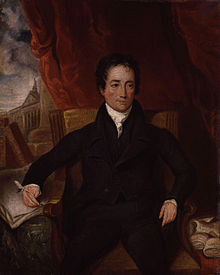
c.Charles lamb-was anEnglishwriter andessayist, best known for hisEssays of Eliaand for the children's bookTales from Shakespeare, which he produced with his sister,Mary Lamb(1764–1847).He also wrote a number of poems, and was part of a literary circle in England, along with Samuel Taylor Coleridge and William Wordsworth, whom he befriended. He has been referred to by E. V. Lucas, his principal biographer, as "the most lovable figure in English literature"
d. Lake District -The Lake District is intimately associated with English literatureof the 18th and 19th centuries. Thomas Gray was the first to bring the region to attention, when he wrote a journal of his Grand Tour in 1769, but it was William Wordsworth whose poems were most famous and influential. Wordsworth's poem "I Wandered Lonely as a Cloud", inspired by the sight of daffodils on the shores of Ullswater, remains one of the most famous in the English language. Out of his long life of eighty years, sixty were spent amid its lakes and mountains, first as a schoolboy at Hawkshead, and afterwards living in Grasmere (1799–1813) and Rydal Mount (1813–50). Wordsworth, Coleridge andSouthey became known as the Lake Poets. William Wordsworth William Wordsworth (7 April 1770 – 23 April 1850) was a major English Romantic poet who, with Samuel Taylor Coleridge, helped to launch the Romantic Age in English literature with their joint publication Lyrical Ballads (1798).
e.Rosencrantz and Guildenstern are characters in William Shakespeare's tragedy Hamlet. They are childhood friends of Hamlet,summoned by King Claudius to distract the prince from his apparent madness and if possible to ascertain the cause of it. The characters were revived in W. S. Gilbert's satire, Rosencrantz and Guildenstern, and as the alienated heroes of Tom Stoppard' sabsurdist play, Rosencrantz and Guildenstern Are Dead.
A holiday is a day set aside by custom or by law on which normal activities, especially business or work, are suspended or reduced. Generally, holidays are intended to allow individuals to celebrate or commemorate an event or tradition of cultural or religious significance. Holidays may be designated by governments, religious institutions, or other groups or organizations. The degree to which normal activities are reduced by a holiday may depend on local laws, customs, the type of job being held or even personal choices.
is a form ofpoetry that tells a story, often making use of the voices of a narrator and characters as well; the entire story is usually written in metred verse. Narrative poems do not have to follow rhythmic patterns. The poems that make up this genre may be short or long, and the story it relates to may be complex. It is usually well it normally dramatic, with objectives, diverse characters, and metre. Narrative poems include epics, ballads, idylls, and lays.
h. Ginger aleis a carbonatedsoft drink flavoured with ginger in one of two ways. The golden style is closer to the ginger beer original, and is credited to the American doctor Thomas Cantrell. The dry style (also called the pale style) is a paler drink with a much milder ginger flavour, and was created by Canadian John McLaughlin. (soft drink)
h.botanist Botany, also called plant science(s) or plant biology, is the science of plant life and a branch of biology. A botanistor plant scientist is a scientist who specializes in this field of study. The term "botany" comes from the Ancient Greek word βοτάνη (botanē) meaning "pasture", "grass", or "fodder"; βοτάνη is in turn derived from βόσκειν (boskein), "to feed" or "to graze"
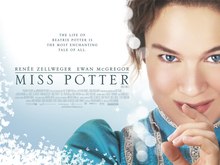
week watch movie- Miss Potter
serif;">Miss Potter is a 2006 English-American biographical fictionfamily drama film directed by Chris Noonan. It is a biographical film of children's author and illustrator Beatrix Potter, and combines stories from her own life with animated sequences featuring characters from her stories, such as Peter Rabbit.
The Devil Wears Prada is a 2006 comedy-drama film based on Lauren Weisberger's 2003 novel of the same name. This screen adaptation stars Anne Hathaway as Andrea Sachs, a college graduate who goes to New York City and lands a job as a co-assistant to powerful fashion magazine editor Miranda Priestly, played by Meryl Streep. Emily Blunt and Stanley Tucci co-star, as co-assistant Emily Charlton and art director Nigel, respectively.
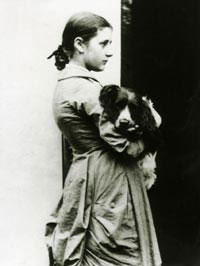
Fantasyis a genre of fictionthat uses magic or other supernatural elements as a main plot element, theme, or setting. Many works within the genre take place in imaginary worlds where magic and magical creatures are common. Fantasy is generally distinguished from the genres of science fiction and horror by the expectation that it steers clear of scientific and macabre themes, respectively, though there is a great deal of overlap between the three, all of which are subgenres of speculative fiction. Anonomatopoeiaadjectival form: "onomatopoeic" or "onomatopoetic"is a word that phonetically imitates, resembles or suggests the source of the sound that it describes. Onomatopoeia (as an uncountable noun) refers to the property of such words. Common occurrences of onomatopoeias include animal noises such as "oink", "miaow" (or "meow"), "roar" or "chirp". Miss Potter is a 2006 English-American biographical fictionfamily drama film directed by Chris Noonan. It is a biographical film of children's author and illustrator Beatrix Potter, and combines stories from her own life with animated sequences featuring characters from her stories, such as Peter Rabbit. Scripted byRichard Maltby, Jr., the director of the Tony-winning Broadway revue, Fosse, the film stars Renée Zellweger in the title role; Ewan McGregor as her publisher and fiancé, Norman Warne; and Lloyd Owen as solicitor William Heelis. Emily Watson stars as Warne's sister, Millie. Lucy Boynton also stars as the young Beatrix Potter.
Bildungsroman In literary criticism, a Bildungsromannovel of formation, novel of education,or coming-of-age story(though it may also be known as a subset of the coming-of-age story) is a literary genre that focuses on the psychological and moral growth of the protagonist from youth to adulthood (coming of age), in which character change is extremely important. Fableis a literary genre: a succinct fictional story, in prose orverse, that features animals, mythical creatures, plants, inanimate objects, or forces of nature that areanthropomorphized (given human qualities, such as verbal communication) and that illustrates or leads to an interpretation of a moral lesson (a "moral"), which may at the end be added explicitly as a pithy maxim. parable A parable is a succinct, didactic story, in prose or verse, which illustrates one or more instructive lessons or principles. It differs from a fable in that fables employ animals, plants, inanimate objects, or forces of nature as characters, whereas parables have human characters.[1] A parable is a type of analogy. e.g: A Tale of a Fairy Tale allegory As a literary device, an allegory in its most general sense is an extended metaphor. Allegory has been used widely throughout history in all forms of art, largely because it can readily illustrate complex ideas and concepts in ways that are comprehensible or striking to its viewers, readers, or listeners.
was an Irish playwright, novelist, essayist, and poet. After writing in different forms throughout the 1880s, he became one of London's most popular playwrights in the early 1890s. He is remembered for his epigrams, his novel The Picture of Dorian Gray, his plays, as well as the circumstances of his imprisonment and early death.
is a form of speech or disclosure which contains an expression of lesser strength than would be expected. Understatement may be employed for emphasis,for humour, or ironically. This is not to be confused with euphemism, where a polite phrase is used in place of a harsher or more offensive expression, though understatement too can be used to moderate something that might seem harsh.
The figure of speech used in understatement, litotes, is always deliberate
was an Irish playwright, novelist, essayist, and poet. After writing in different forms throughout the 1880s, he became one of London's most popular playwrights in the early 1890s. He is remembered for his epigrams, his novel The Picture of Dorian Gray, his plays, as well as the circumstances of his imprisonment and early death.
His works-
New Vocabulary
1. radish白蘿蔔
2. tool shed
3. scarecrow 稻草人
4. lane 巷子
5. drop 大水滴 ; drip 小水滴
6 get into mischief 搗亂
7. parsley 西芹
8. be frightened
9. wriggle
10. dosage
Neverlandis a fictional location featured in the works of J. M. Barrie and those based on them. It is the dwelling place of Peter Pan, Tinker Bell, the Lost Boys and others. Although not all people in Neverland cease to age, its best known resident famously refused to grow up, and it is often used as a metaphor for eternal childhood (and childishness),immortality, and escapism. It was first introduced as "the Never Never Land" in the theatre playPeter Pan, or The Boy Who Wouldn't Grow Up by Scottish writer J. M. Barrie, first staged in 1904.
Fable is a literary genre: a succinct fictional story, in prose orverse, that features animals, mythical creatures, plants, inanimate objects, or forces of nature that areanthropomorphized (given human qualities, such as verbal communication) and that illustrates or leads to an interpretation of a moral lesson (a "moral"), which may at the end be added explicitly as a pithy maxim.
note: 寓言無規範的價值
A fable differs from a parable in that the latter excludes animals, plants, inanimate objects, and forces of nature as actors that assume speech or other powers of humankind.
vocabulary
1. radiant (adj) 開心的、美麗的
meaning:obviously very happy, or verybeautiful
2. protagonist 反角
meaning: an importantsupporter of an idea or politicalsystem
1: "The pig couldn't help being born small, could it? If I had been small at birth, would you have killed me?" Correct Answer: Fern Arable (page 3)
2: "Salutations!" Correct Answer: Charlotte (page 35)
3: "Well, I don't like to spread bad news, but they're fattening you up because they're going to kill you, that's why." Correct Answer: The oldest sheep (page 49)
4: "Fern spends entirely too much time in the Zuckermans' barn. It doesn't seem normal." Correct Answer:Mrs. Arable (page 107)
5: "I don't understand it. But for that matter I don't understand how a spider learned to spin a web in the first place. When the words appeared, everybody said they were a miracle. But nobody pointed out that the web itself is a miracle." Correct Answer: Dr. Dorian (page 108-109)
6: "I have decided to take the pig to the County Fair on September sixth. Make the crate large and paint it green with gold letters!" Correct Answer: Mr. Zuckerman (page 96)
7: "We're staying quietly-ietly-ietly at home. Only Wilbur-ilbur-ilbur is going to the Fair." Correct Answer: The goose (page 122)
8: "I am going to give that pig a buttermilk bath." Correct Answer: Mrs. Zuckerman (page 120)
9: "Sure I'm a spring pig. What did you think I was, a spring chicken?" Correct Answer: Uncle (page 134)
10: "Please, please, please, Templeton, climb up and get the egg sac." Correct Answer: Wilbu (page 166)
Plotrefers to the sequence of events inside a story which affect other events through the principle of cause and effect. The causal events of a plot can be thought of as a series of sentences linked by "and so." Plots can vary from simple structures such as in a traditional ballad to complex interwoven structures sometimes referred to as an imbroglio. The term plot can serve as a verb and refer to a character planning future actions in the story.
Exposition
The first phase in Freytag's pyramid is the exposition. The exposition introduces the main characters of the story, especially the main character, also known as the protagonist. It shows how the characters relate to one another, their goals and motivations, as well as their moral character. During the exposition, the protagonist learns their main goal and what is at stake.
Conflict
Freytag’s definition of conflict must not be confused with Sir Arthur Thomas Quiller-Couch's definition of conflict. Quiller-Couch uses the term to categorize plots into types (e.g., man vs. society). The main difference is that according to Quiller-Couch's mode of analysis, an entire story can be discussed in terms of its conflict. Freytag's definition of conflict refers to the second act in a five-act play, a point of time in which all of the major characters have been introduced, their motives and allegiances have been made clear, and they have begun to struggle against one another.
Rising action
Rising action is the second phase in Freytag's five-phase structure. It starts with a conflict, for example, the death of a character. The inciting incident is the point of the plot that begins the conflict. It is the event that catalyzes the protagonist to go into motion and to take action. Rising action involves the buildup of events until the climax.
Climax
The climax is the turning point or highest point of the story. The protagonist makes the single big decision that defines not only the outcome of the story, but also who they are as a person. Freytag defines the climax as the third of the five dramatic phases which occupies the middle of the story.
Falling action
According to Freytag, the falling action phase consists of events that lead to the ending. Character's actions resolve the problem. In the beginning of this phase, the antagonist often has the upper hand. The protagonist has never been further from accomplishing their goal. The outcome depends on which side the protagonist has put themselves on.
Resolution
In this phase the protagonist and antagonist have solved their problems and either the protagonist or antagonist wins the conflict. The conflict officially ends. Some stories show what happens to the characters after the conflict ends and, or they show what happens to the characters to the future.
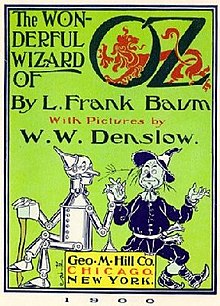
The Wonderful Wizard of Oz is an American children's novel written by authorL. Frank Baumand illustrated by W. W. Denslow, originally published by the George M. Hill Company in Chicago on May 17, 1900. It has since been reprinted on numerous occasions, most often under the title The Wizard of Oz, which is the title of the popular 1902 Broadway musical as well as the iconic 1939 musical film adaptation.