The Boy Who Cried Wolf is one of Aesop's Fables, numbered 210 in the Perry Index. From it is derived the English idiom "to cry wolf", defined as "to give a false alarm" in Brewer's Dictionary of Phrase and Fable and glossed by the Oxford English Dictionary as meaning to make false claims, with the result that subsequent true claims are disbelieved.
allegory
As a literary device, an allegory in its most general sense is an extended metaphor. Allegory has been used widely throughout history in all forms of art, largely because it can readily illustrate complex ideas and concepts in ways that are comprehensible or striking to its viewers, readers, or listeners.
Writers or speakers typically use allegories as literary devices or as rhetorical devices that convey hidden meanings through symbolic figures, actions, imagery, and/or events, which together create the moral, spiritual, or political meaning the author wishes to convey
allegorical work
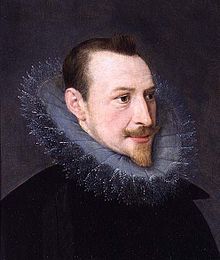
Edmund Spenser was an English poet best known for The Faerie Queene, an epic poem and fantastical allegory celebrating the Tudor dynasty and Elizabeth I. He is recognized as one of the premier craftsmen of nascent Modern English verse, and is often considered one of the greatest poets in the English language.
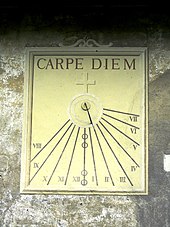
Carpe diem is a Latin aphorism, usually translated "seize the day", taken from book 1 of the Roman poet Horace's work Odes (23 BC).
is one of the parables of Jesus. It appears in only one of the Canonical gospels of the New Testament, the Gospel of Luke (Luke 15:11-32). Jesus shares it with his disciples, the Pharisees and others. According to the story, a father has two sons. The younger son asks for his inheritance before the father dies, and the father agrees. The younger son, after wasting his fortune (the word "prodigal" means "wastefully extravagant"), goes hungry during a famine, and becomes so destitute he longs to eat the same food given to hogs, unclean animals in Jewish culture.

Fable
Fable is a literary genre: a succinct fictional story, in prose orverse, that features animals, mythical creatures, plants, inanimate objects, or forces of nature that are anthropomorphized (given human qualities, such as verbal communication) and that illustrates or leads to an interpretation of a moral lesson (a "moral"), which may at the end be added explicitly as a pithy maxim.
A fable differs from a parable in that the latter excludes animals, plants, inanimate objects, and forces of nature as actors that assume speech or other powers of humankind.
Lyric poetry is a form of poetry which expresses personal emotions or feelings, typically spoken in the first person.The term derives from a form of Ancient Greek literature, the lyric, which was defined by its musical accompaniment, usually on a stringed instrument known as a lyre.[2] The term owes its importance in literary theory to the division developed by Aristotle between three broad categories of poetry: lyrical, dramatic and epic.
"To the Virgins, to Make Much of Time" is a poem written by English Cavalier poet Robert Herrick in the 17th century.
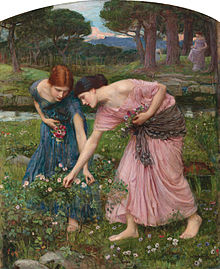
Aesop's Fables or the Aesopica is a collection of fablescredited to Aesop, a slave and storyteller believed to have lived in ancient Greece between 620 and 560 BCE. Of diverse origins, the stories associated with Aesop's name have descended to modern times through a number of sources. They continue to be reinterpreted in different verbal registers and in popular as well as artistic media."To the Virgins, to Make Much of Time" is a poem written by English Cavalier poet Robert Herrick in the 17th century.
- Gather ye rosebuds while ye may,
- Old Time is still a-flying;
- And this same flower that smiles today
- To-morrow will be dying.
- The glorious lamp of heaven, the sun,
- The higher he's a-getting,
- The sooner will his race be run,
- And nearer he's to setting.
- That age is best which is the first,
- When youth and blood are warmer;
- But being spent, the worse, and worst
- Times still succeed the former.
- Then be not coy, but use your time,
- And, while ye may, go marry:
- For having lost but once your prime,
- You may forever tarry.
The North Wind and the Sun is one of Aesop's Fables (Perry Index 46). It is type 298 (Wind and Sun) in the Aarne-Thompson folktale classification.[1] The moral it teaches about the superiority of persuasion over force has made the story widely known. It is also known for being a chosen text for phonetic transcriptions.

The King James Version (KJV), also known as the Authorized Version (AV) or King James Bible (KJB), is an English translationof the Christian Bible for the Church of England that begun in 1604 and completed in 1611
First printed by the King's Printer Robert Barker, this was the third translation into English to be approved by the English Church authorities. The first was the Great Bible commissioned in the reign of King Henry VIII (1535), and the second was the Bishops' Bible of 1568. In January 1604, James I convened the Hampton Court Conference where a new English version was conceived in response to the perceived problems of the earlier translations as detected by the Puritans,]a faction within the Church of England. The translation is widely considered a towering achievement in English literature, as both beautiful and scholarly.
Developed by authors during Renaissance times, the story of an ass eating thistles was a late addition to collections of Aesop's Fables. Beginning as a condemnation of miserly behaviour, it eventually was taken to demonstrate how preferences differ.

The Fox and the Grapes is one of the Aesop's fables,numbered 15 in the Perry Index. The narration is concise and subsequent retellings have often been equally succinct. The story concerns an anthropomorphized fox that tries to eat grapes from a vine but cannot reach them. Rather than admit defeat, it denies they are desirable in a rationalisation that has been identified with cognitive dissonance. The expression "sour grapes" originated from this fable.
It happened that a Fox caught its tail in a trap, and in struggling to release himself lost all of it but the stump. At first he was ashamed to show himself among his fellow foxes. But at last he determined to put a bolder face upon his misfortune, and summoned all the foxes to a general meeting to consider a proposal which he had to place before them. When they had assembled together the Fox proposed that they should all do away with their tails. He pointed out how inconvenient a tail was when
they were pursued by their enemies, the dogs; how much it was in the way when they desired to sit down and hold a friendly conversation with one another. He failed to see any advantage in carrying about such a useless encumbrance.
"That is all very well," said one of the older foxes; "but I do not think you would have recommended us to dispense with our chief ornament if you had not happened to lose it yourself."
|


Note: assemble(verb)
put a bolder face upon his misfortune. 臉皮厚
There was a farmer who was trapped on his country estate by a winter storm. He didn't have any food, so first he ate his sheep, then his goats. When the storm got worse, he even slaughtered the oxen who pulled his plow. When the dogs saw what was happening, they said to one another, 'Let's get out of here now! Since we can see that the master didn't even spare the oxen who labour on his behalf, how can we expect to be spared?'
The story shows that you should especially avoid someone who does not even spare his own people.
The story shows that you should especially avoid someone who does not even spare his own people.
A metaphor is a figure of speech that identifies something as being the same as some unrelated thing for rhetorical effect, thus highlighting the similarities between the two. While a simile compares two items, a metaphor directly equates them, and does not use "like" or "as" as does a simile.
The King James Version (KJV), also known as the Authorized Version (AV) or King James Bible (KJB), is an English translationof the Christian Bible for the Church of England that begun in 1604 and completed in 1611.
First printed by the King's Printer Robert Barker, this was the third translation into English to be approved by the English Church authorities. The first was the Great Bible commissioned in the reign of King Henry VIII (1535), and the second was the Bishops' Bible of 1568. In January 1604, James I convened the Hampton Court Conference where a new English version was conceived in response to the perceived problems of the earlier translations as detected by the Puritans, a faction within the Church of England.The translation is widely considered a towering achievement in English literature, as both beautiful and scholarly
de-
defeat: an unsuccessful ending to a struggle or contest
vegetable love 滋長的愛情
I cant be contented with yesterdays glory
I cant live on promises winter to spring
Today is my moment, now is my story
Ill laugh and Ill cry and Ill sing

沒有留言:
張貼留言